
What is a dental implant?
A dental implant is a piece of titanium shaped like a screw. A dentist places it in the jawbone, where it bonds to the bone, and it then holds a crown, a bridge or a denture. It replaces the root of a missing tooth, not the tooth you see.
The post, the connector and the crown, how it holds in the bone and what it is not.
Free and no obligation. Your request goes to one Dental Council registered dentist who places implants, not a list.
- 3 partsthe implant, the connector, the crown
- Over 90%of implants bond to the jawbone, per hospital information
- 3 to 6 monthsusual time to heal in the bone
- €1,300–€3,500one implant and its crown
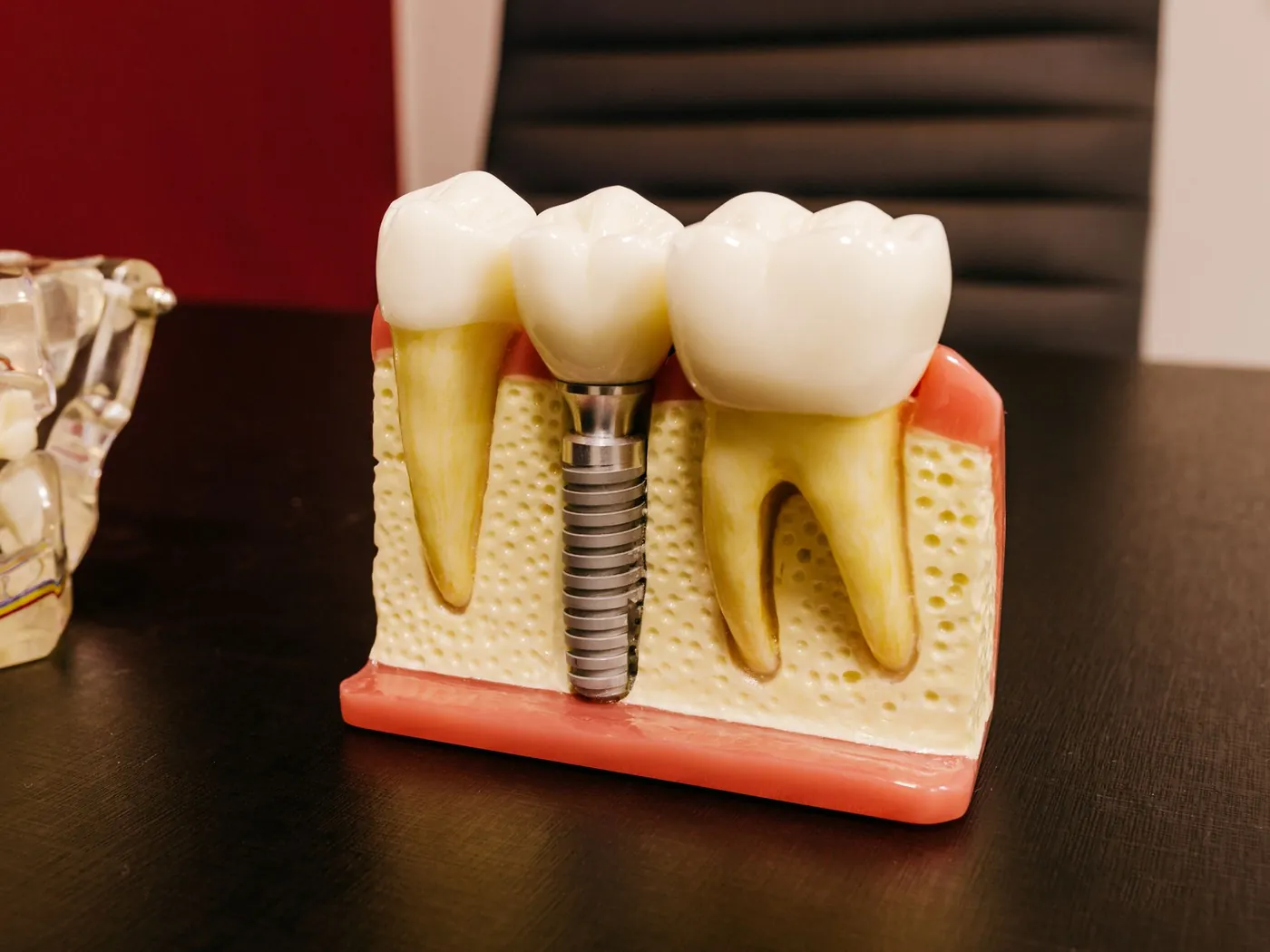
The three parts
The implant
€650–€1,940
The titanium post in the bone. It acts as the root.
The connector
no separate price found
A small part that joins the post to the crown. Clinics fold it into another line, so ask where it is.
The crown
€650–€1,700
The tooth you see, made to fit the gap and the bite.
Some clinics quote a single figure for all three. Others list the implant and the crown on separate lines, and you add them.
Price my implant
Three taps and the price range shows as you go. Your name and number come last, and only if you want a dentist to price it.
A tooth or teeth you are not sure about, lost under a year ago, elsewhere in Ireland: Priced after an examination.
How the price is worked out
The figure is the range of what Irish dental clinics charge for it now: the lowest and the highest. An implant with its crown covers the implant, its fitting and the crown. A scan, a bone graft or a sinus lift is priced on top, and only if your dentist says you need one. Only a dentist can say whether an implant suits you, after an examination. Use the range to plan with. It isn't a quote: your dentist prices yours in writing.
Where it differs from a bridge or a denture
Implant
- Held by
- The jawbone
- Teeth beside the gap
- Left alone
- Comes out for cleaning
- No
Bridge
- Held by
- Crowns on the teeth either side
- Teeth beside the gap
- Drilled down
- Comes out for cleaning
- No
Denture
- Held by
- The gums, or clips to implants
- Teeth beside the gap
- Clasped or left alone
- Comes out for cleaning
- Yes
Which suits you is a dentist's call. Implant or bridge.
How it holds in the bone
Titanium and bone grow together. That is why an implant needs time to heal after it is placed, usually three to six months, before the crown is fitted. Over 90% of implants bond to the jawbone, according to hospital patient information. An implant that does not bond is taken out, and may be replaced after the area has healed.
Why bone matters
The jaw needs enough height and width to hold the post. When a tooth has been gone for a long time, the bone that used to carry it can shrink away. A bone graft can rebuild it. Bone grafts and sinus lifts.
More on implants
 Front tooth implantA tooth people see when you smile. The crown on an implant is €650 to €1,700, and more for a front tooth in a complex case.
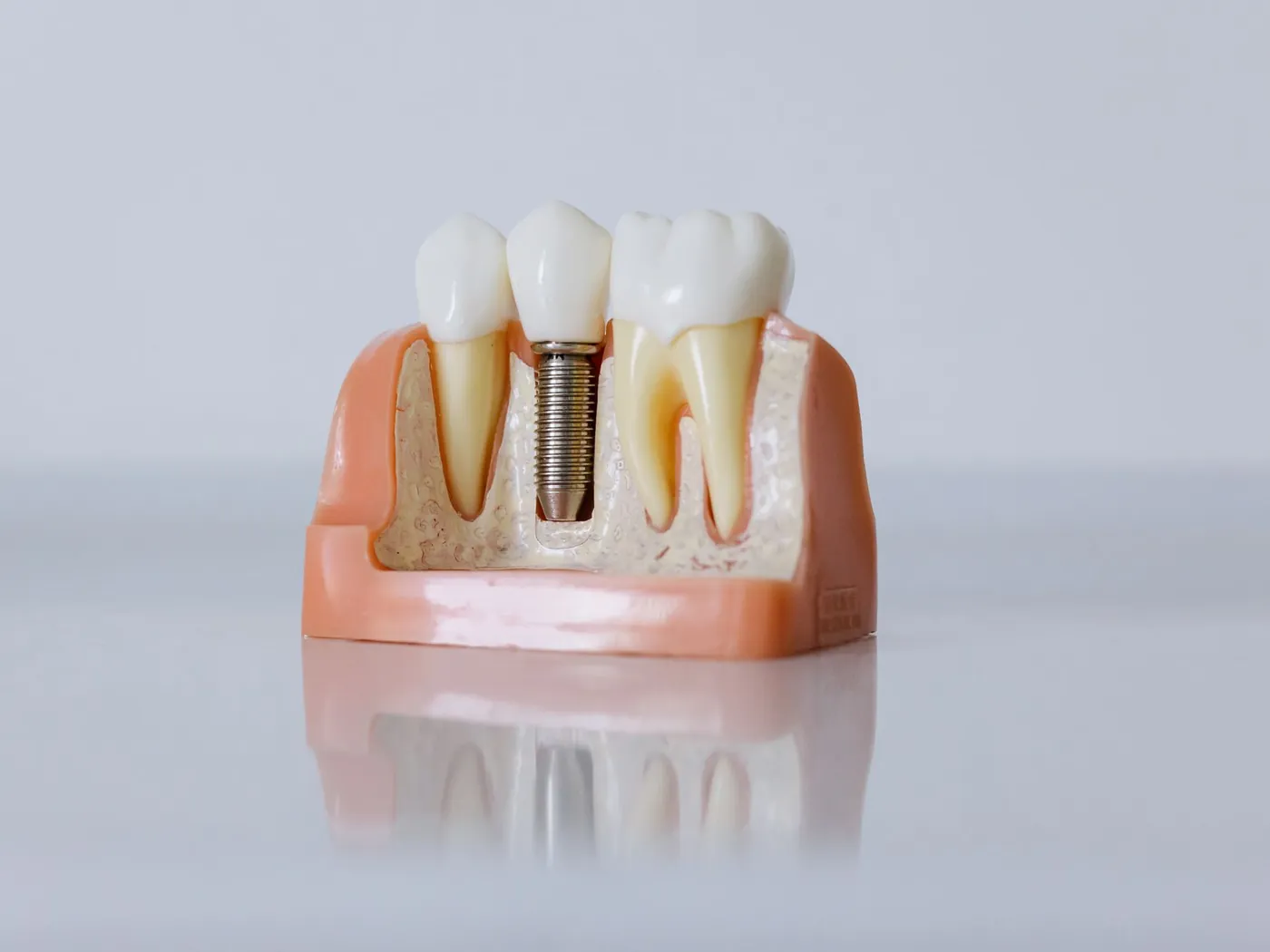 Implant crownThe tooth you see and chew with, fitted on the implant once it has healed. €650 to €1,700.
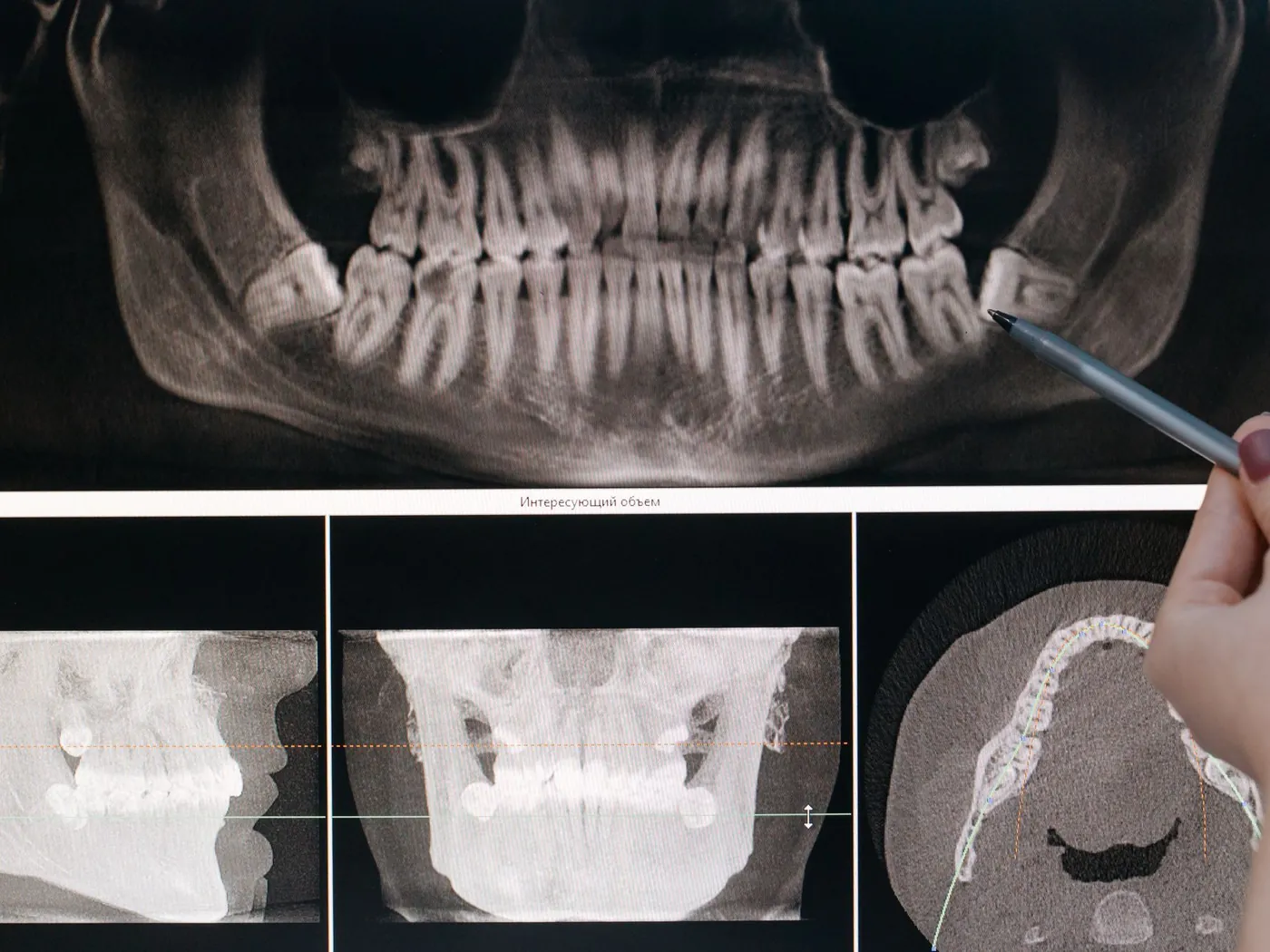 Bone graft and sinus liftRebuilding bone before an implant, only if a scan shows it is needed. A graft is €400 to €2,000 and a sinus lift €800 to €3,000.
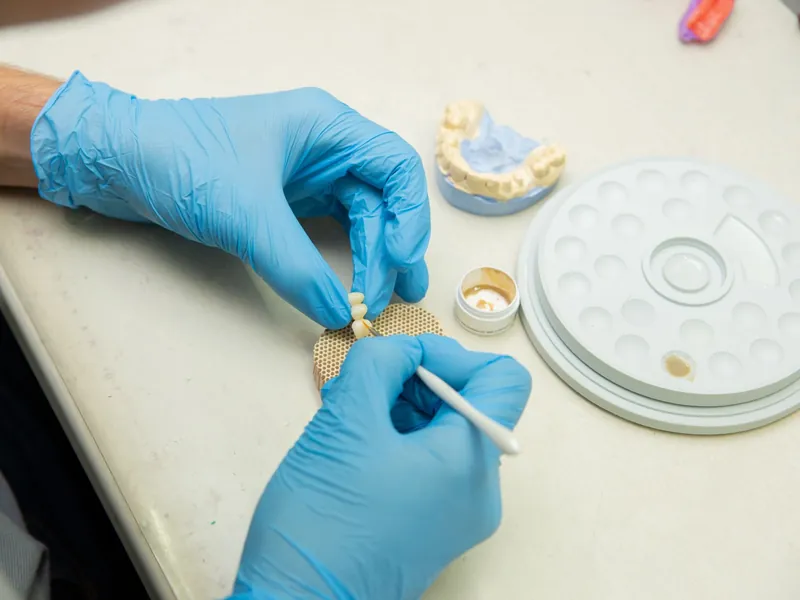 Implant or bridgeA bridge for one tooth is €1,031 to €1,625. An implant with its crown is €1,300 to €3,500. What each one asks of the teeth beside the gap.
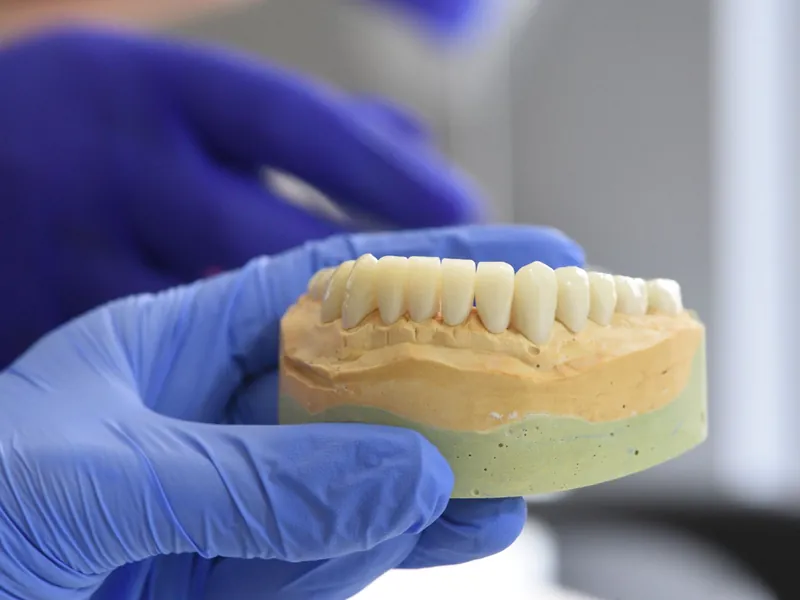 Full mouth implantsA whole arch of teeth on implants, the all-on-4 way. €6,500 to €25,000 an arch.
Questions before you decide
What is a dental implant made of?
Titanium.
Is an implant the whole tooth?
No. It is the root part. A crown, a bridge or a denture is fitted on top.
Does an implant need the teeth next to it?
No. It stands in the bone on its own, so the neighbouring teeth are not drilled.
How many teeth can an implant replace?
One, or more: two implants can carry a bridge of three teeth, and four can carry a whole arch.
Is a dental implant permanent?
It is meant for the long term, but nothing is promised. Hospital patient information puts implant success at 80 to 95% over 15 years for people with healthy mouths, and 80 to 85% over seven years for people with gum disease. It depends on the bone, the gums, whether you smoke and how well the implant is kept clean.
Everything on this site
Treatments
Costs, rules and guides
See the price range before anyone rings
Pick what you are missing, when it was lost and the nearest city. When you want a firm price, your request goes to a single Dental Council registered dentist who places implants.